The Whopper
The flame-grilled giant from 1957. Burger King's Whopper was created in 1957 to beat a rival's bigger burger. Its history, flame-grilled taste, toppings and calories.
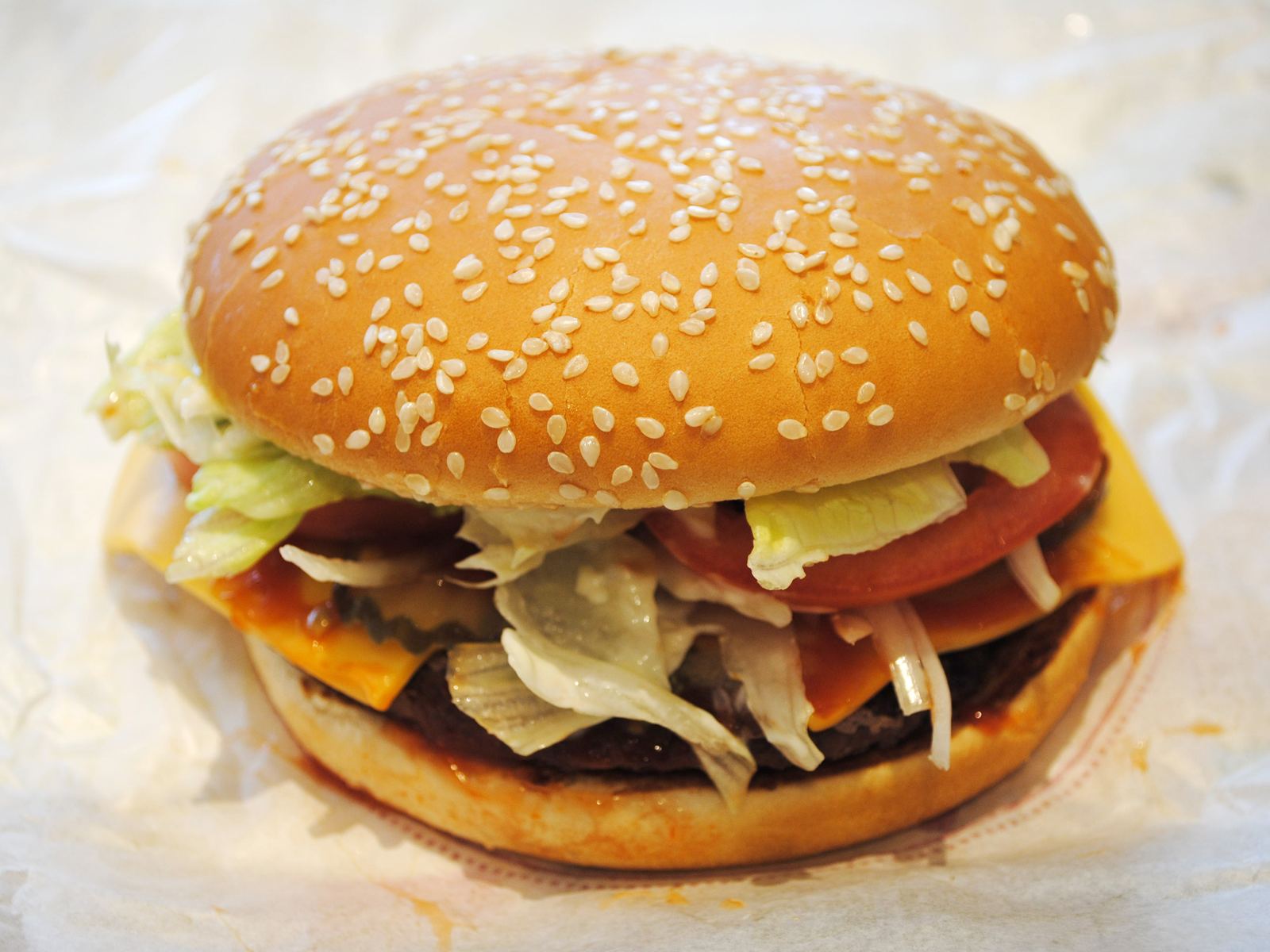
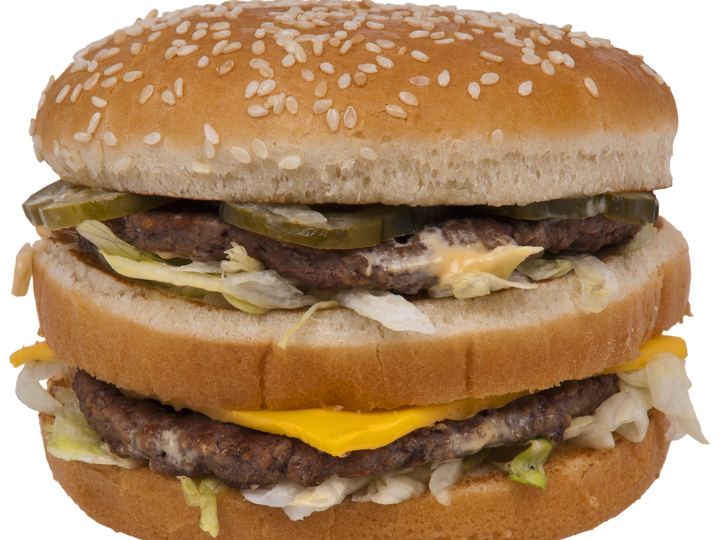
A Whopper with cheese: Lombroso, CC BY-SA 3.0
Bigger on purpose
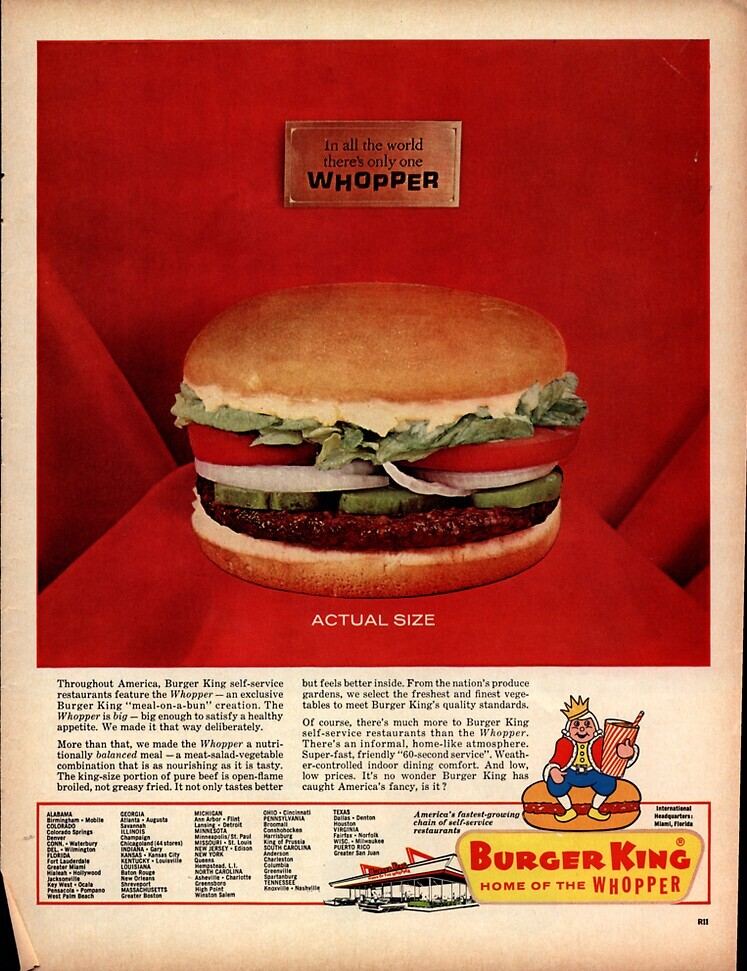
In 1957, Burger King co-founder James McLamore noticed that a rival restaurant in Gainesville, Florida, was doing well by selling a larger burger. He decided size was the secret and created a bigger sandwich of his own. He called it the Whopper because the name suggested something big.
It sold for 37 cents and quickly became the center of the chain's advertising, which still calls Burger King the home of the Whopper. A smaller Whopper Jr. joined the menu in 1963.
How it is built
A classic Whopper starts with a quarter-pound class beef patty that is flame-grilled, giving it a smoky, charred taste. It is topped with tomato, lettuce, mayonnaise, ketchup, pickles and sliced white onion on a sesame seed bun.
The bun has changed over the years. The burger started on a plain bun, switched to sesame around 1970, moved briefly to a Kaiser roll in the 1980s and then went back to sesame in 1994.
Nutrition, in perspective
A US Whopper has about 670 calories. That is more than a Big Mac, but the Whopper is also bigger, about 290 grams, so per 100 grams it actually has slightly fewer calories than its rival.
Most of the fat comes from the beef patty and the mayonnaise. Ordering it without mayo is a common way to cut calories, and the official nutrition calculator on the chain's website shows the effect of every change.
Copy that
Competitors took years to answer the Whopper. Big chains did not launch similar large burgers until the early 1970s, when the Quarter Pounder and others arrived.
Today the Whopper is sold in dozens of countries, sometimes under local names. In Australia, for example, the chain operates as Hungry Jack's, but the Whopper keeps its famous name.
Have it your way
Customising has always been part of the Whopper's story. The chain built a whole advertising campaign around letting customers change toppings, and today the official ordering tools let you remove or add almost anything.
Popular changes include extra pickles, no onions, adding cheese or bacon and swapping the sauce. Every change shifts the nutrition numbers, so check the calculator if you are watching calories, salt or fat. Small changes, like dropping the mayonnaise, can save more than a hundred calories without losing the flame-grilled taste.
- A Whopper with cheese: Lombroso, CC BY-SA 3.0
- A 1968 advert: Unknown author, Public domain
Text written by Fast Food Run.